Research & Educational Resources

Comprehensive tools and data for exploring Saturn's ring system

Advancing Planetary Ring Science

Our research resources combine theoretical frameworks, observational data, and computational tools to provide a comprehensive understanding of Saturn's rings. Whether you're a researcher, student, or educator, these materials offer insights into one of the most studied phenomena in planetary science.

🌌

Theories of Ring Formation

Explore competing hypotheses about the origin of Saturn's rings, from tidal disruption of moons to capture of cometary material. Our comprehensive review synthesizes decades of theoretical work and observational constraints on ring age and composition.

Learn More
📡

Cassini–Huygens Data Archives

Access curated datasets from the Cassini mission, including high-resolution imaging, spectroscopic measurements, radio occultation profiles, and gravitational field data. Our annotated archives make mission data accessible for analysis and education.

Explore Data
🖥️

Computational Modeling

Utilize our open-source simulation tools for modeling ring particle dynamics, gravitational resonances, and wave propagation. These N-body and hydrodynamic codes enable researchers to test hypotheses and visualize complex ring behaviors.

View Models
📊

Visualization Tools

Interactive 3D visualizations and educational animations help illustrate ring structure, orbital mechanics, and temporal evolution. Our tools are designed for both research presentations and classroom education at all levels.

Access Tools

Key Research Areas

Gravitational wave patterns in rings

Gravitational Resonances & Wave Phenomena

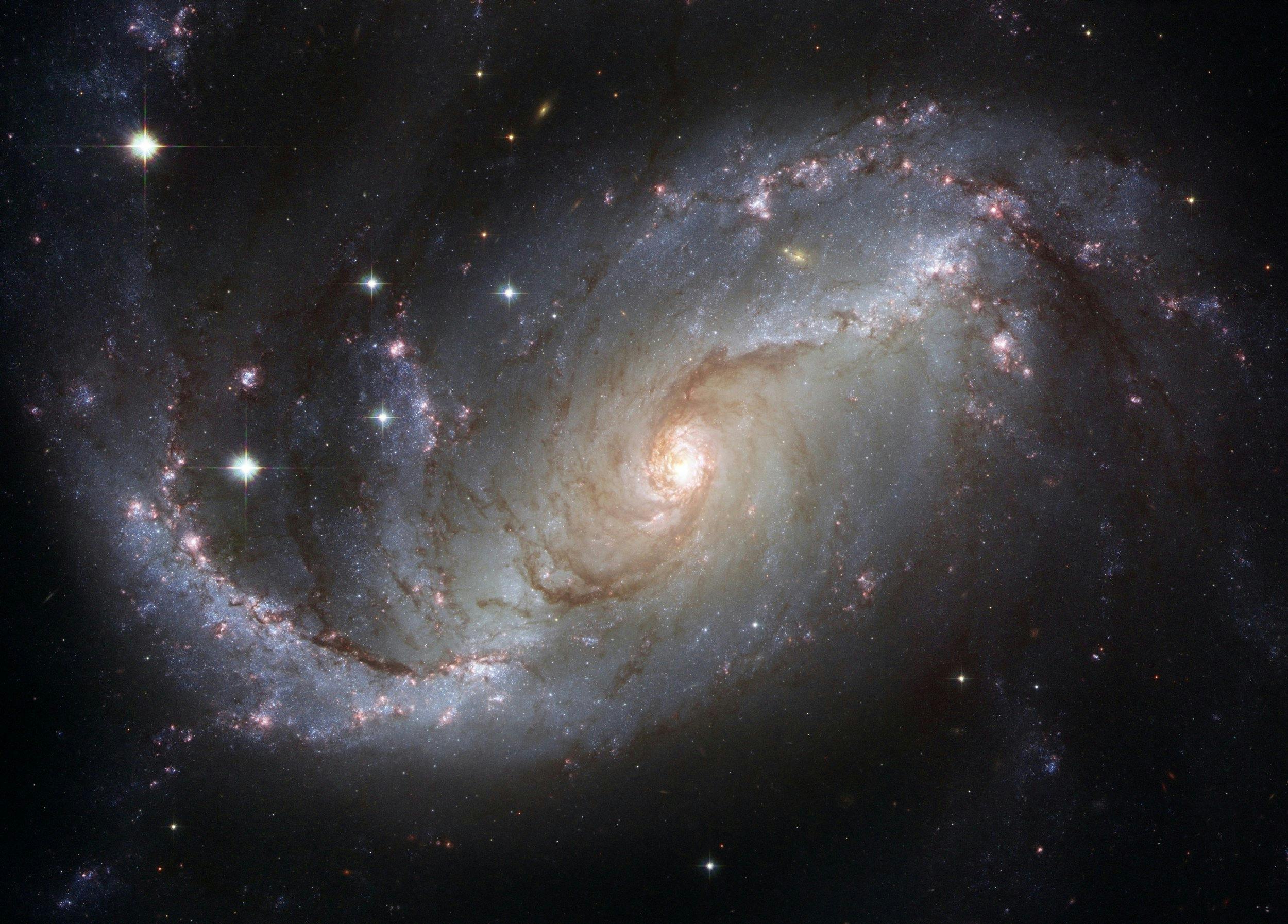
The intricate patterns observed in Saturn's rings result from gravitational resonances with moons, both large and embedded. Density waves, bending waves, and spiral structures provide windows into the gravitational architecture of the Saturn system.

Our research examines how these waves propagate through the ring plane, dissipate energy, and contribute to ring evolution over time. Understanding wave dynamics is crucial for constraining ring mass and internal structure.
Ring particle composition analysis

Ring Composition & Spectroscopy

Spectroscopic observations reveal that Saturn's rings are composed primarily of water ice, with varying amounts of contaminants and rocky material. The radial and azimuthal variations in composition provide clues to ring formation and evolution.

We analyze visible, near-infrared, and ultraviolet spectra to determine particle size distributions, surface properties, and the nature of non-ice components. These studies help constrain models of ring origin and dynamical processing.

Orbital mechanics simulation

Long-term Ring Evolution

Saturn's rings are not static; they evolve through a variety of processes including meteoroid bombardment, plasma interactions, and gravitational instabilities. Recent studies suggest the rings may be surprisingly young—perhaps only hundreds of millions of years old.

Our modeling work explores ring lifetimes, mass loss rates, and the ultimate fate of the ring system. Understanding ring evolution has implications for similar structures around other giant planets and exoplanets.

Recent Publications

Propeller Structures and Embedded Moonlets in Saturn's A Ring

Authors: Hayes, E., Chen, M., Okonkwo, A. et al.

Published in Icarus, 2024 | Read Article

Thermal Emission from Saturn's B Ring: Constraints on Particle Size and Density

Authors: Chen, M., Hayes, E.

Published in The Astrophysical Journal, 2023 | Read Article

Re-evaluating the Age of Saturn's Rings Through Cassini Ring Seismology

Authors: Okonkwo, A., Hayes, E., Chen, M.

Published in Science, 2023 | Read Article

Ready to Explore Ring Science?

Access our full research library, datasets, and computational tools.

Request Access